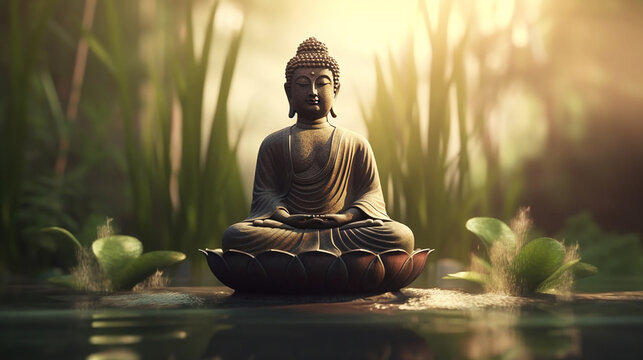
Guru Poornima, also known as Buddha Poornima, is a significant day marking the attainment of wisdom by Buddha. This day is celebrated by disciples honoring their gurus through various activities and celebrations. Buddha, originally named Siddharth, was born in Lumbini, Nepal, to King Suddhodhana and Queen Mayadevi. Tragically, his mother died seven days after his birth, and he was raised by his aunt.
Early Life of Siddharth
Siddharth was born into royalty and was provided with a life of luxury by his father, who wanted to shield him from the harsh realities of life. Despite living in a palace with every comfort, Siddharth felt uneasy and dissatisfied with this sheltered existence. At the age of 16, Siddharth married a loving and respectable woman, whom he cherished deeply.
The Journey Begins
At the age of 35, without his father’s knowledge, Siddharth left the palace with his chariot and driver to explore the world beyond. During his journey, he encountered a dead man, an old man walking slowly, and a diseased man. Each encounter prompted him to question the nature of life and death. The driver explained that death, old age, and disease were inevitable parts of life, which deeply troubled Siddharth.
The Search for Truth
Determined to understand the truth about life and death, Siddharth embarked on a journey of self-discovery. He learned from various gurus and excelled in their teachings, but his quest for ultimate knowledge remained unfulfilled. In Varanasi, India, he met a musician who taught him an important lesson: just as a veena’s strings must be neither too tight nor too loose to produce music, one must find a balance in life.
Realization and Enlightenment
This realization led Siddharth to change his approach to spiritual practice. He had been causing himself great physical pain through extreme asceticism, becoming so weak that he could not withstand even a small wave in water. Remembering the musician’s advice, he decided to find a middle path. After being fed by a kind woman who saw his hunger, Siddharth sat under the Bodhi tree, vowing not to rise until he attained wisdom.
Attaining Wisdom
For six years, Siddharth practiced intense meditation and yogic disciplines. On a full moon night, he finally reached enlightenment, achieving a state of emptiness and wisdom. After this profound transformation, he returned to his palace to meet his wife. She questioned why he could not have attained wisdom while staying with her. Buddha replied that at the time, he did not know it was possible.
Teaching and Legacy
Buddha gained many disciples and spread his teachings widely. He emphasized that desire is the root cause of suffering. By “desire,” he referred to the unconditional love and attachment people have for things or individuals. Buddha’s path involved searching for answers and enduring suffering for six years until he reached enlightenment by letting go of all desires.
Lessons from Buddha
Buddha taught that to attain wisdom, one must first relinquish all desires and attachments. A disciple once asked why people do not strive for wisdom if Buddha’s methods are straightforward. Buddha suggested the disciple visit a village and document the desires of the people. Upon reading the list, it was clear that no one wanted wisdom; their desires were focused on wealth and personal gains. This illustrates that most people are unaware of what they truly want, and their desires constantly grow.
Conclusion
Buddha’s journey from a life of luxury to enlightenment teaches us the importance of balance, letting go of desires, and finding one’s path to wisdom. His teachings have influenced many, including Jesus, who is said to have learned the path of Buddha during his visit to Tibet. Buddha’s story reminds us that true enlightenment comes from within, by relinquishing our desires and understanding the deeper truths of life.